
I moved to Shanghai to teach with ThinkWriteSpeak in 2026. It has been my second time working in China, having first come over in 2018. A lot has changed since then, and the visa process trips people up in different ways than it used to. Here’s exactly what the China teacher visa process looked like for me, step by step.
Note: this is the process for UK passport holders specifically. Requirements, costs, and the exact checks needed (the ACRO check especially) vary for other nationalities – treat this as a real account of the general process, with UK-specific steps, not a specific guide for all nationalities.
The China Teacher Visa Process, at a Glance
- Step 1 – Applying for the Work Permit: This document allows you to get the stamp in your passport. You gather your documents at home and send them by email to ThinkWriteSpeak in China. ThinkWriteSpeak applies for the work permit in China.
- Step 2 – Applying for the Z Visa: Once the work permit is approved, ThinkWriteSpeak receive an invitation letter. This is basically the Chinese government saying yes we invite you to come and work in China. You print the invitation letter and use it to get an appointment at the China Visa Application Service Center. This is where you get the stamp in your passport.
- Step 3: Travel to China: The next step is to pack and get on your flight! Remember to bring the originals of all of your documents
- Step 4 – Applying for the Residence Permit: When you arrive in China, you must hand in your passport and all documents to convert your Z-Visa to a Residence Permit. You must do this within 30 days of arrival. The Residence Permit is the main stamp in your passport that confirms you are living in China, and you use this to open a bank account and rent an apartment.
Step 1: Applying for the Work Permit
Once ThinkWriteSpeak offers you the role, they send a checklist of documents to gather while you’re still at home. You send these to ThinkWriteSpeak in China, and they apply for the Work Permit on your behalf — you don’t need to be in the country for this step. Here’s every document on that checklist.
Signed Contract
Straightforward – your signed employment contract, sent back to ThinkWriteSpeak as part of the document pack.
Passport-Style Photos
Passport photos to the correct specification for China – this isn’t the same size/format as a UK passport photo, so don’t reuse old ones; get them taken (or check the spec) specifically for this application.
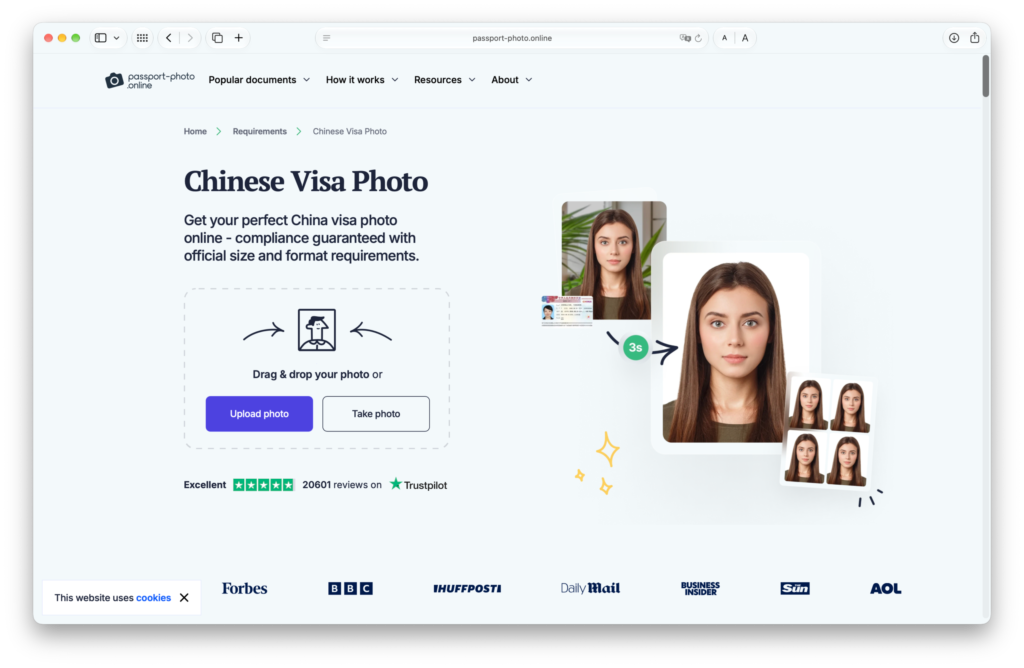
One tip from my experience: I actually took my own photo as a selfie with me standing in front of white wall at home. Then I used Passport Photo Online to get a digital photo saved in the correct dimensions for China. With this, I just went to a local photo shop (Max Spielmann for me in the UK) and printed the photos off on standard photo paper. This allowed me to still have a digital copy which means I can print more in future if I need.
Criminal Record Check (ACRO)
UK applicants need an ACRO police certificate. It asks for references and a full 10-year UK address history – every address, even ones you only lived at for a short period.
- Cost: £68 standard
- Timeline: up to 20 working days standard; a premium/expedited service exists for faster turnaround (I paid for this) at a higher cost, though its availability has been on and off — check current status before relying on it
Degree Legalisation (Apostille)
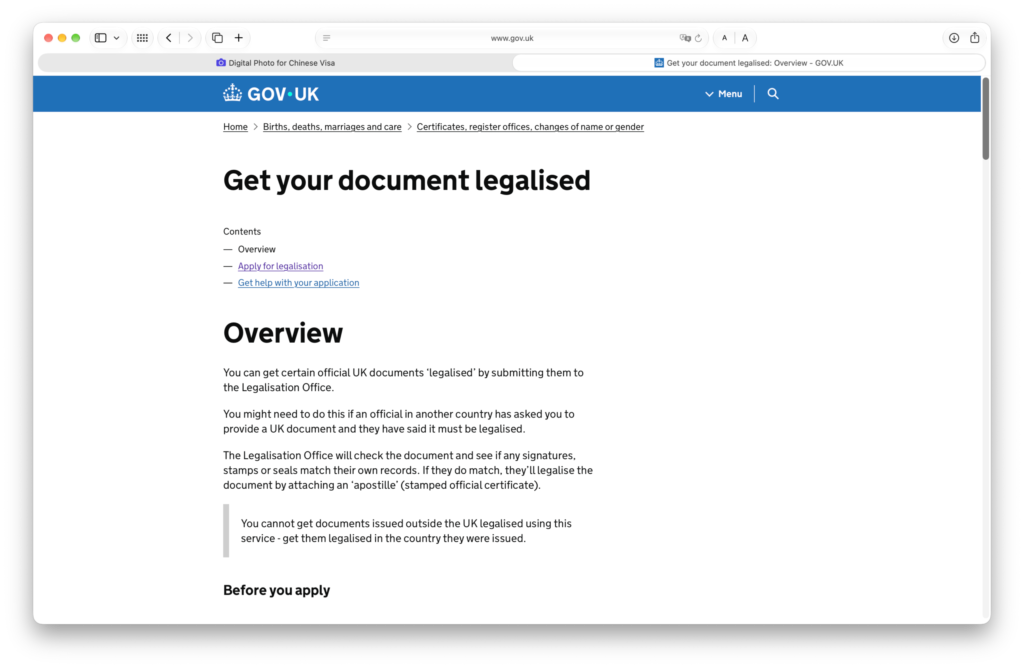
Your degree certificate needs an apostille (official legalisation confirming it’s genuine) issued by the FCDO Legalisation Office, based at Hanslope Park near Milton Keynes.
- Cost: £45 per document + post
- Timeline: around 10 working days by post
- Send it Royal Mail Tracked, and print off their application form to include inside the envelope. They use it to match and return your documents, and missing this step causes delays or might even lead to your documents getting lost. We don’t want that.
Medical Check
This changed since I first came to China in 2018. Back then, I did the medical check after arriving in the country. This time, I had to do it in the UK before leaving. A quick Google search for “China visa medical check near me” turned up a local clinic.
- Cost: roughly £500-£600 in the Manchester area for me (by far the most expensive part of this entire process)
- Timeline: results typically confirmed within a few working days and sent by tracked post
The exam is more comprehensive than people expect. In my case it covered blood tests and an ECG, plus basic eye and ear checks. The official standard for this exam (the “Foreigner Physical Examination Record” used across China) also typically includes:
- Blood tests for HIV, syphilis, and Hepatitis B
- A chest X-ray (screening for tuberculosis)
- An abdominal ultrasound
- Basic physical checks: height, weight, blood pressure, vision
Keep every document from this appointment safe – you’ll need them again once you land in China.
Once everything’s gathered and sent over, ThinkWriteSpeak handles the Work Permit application itself at the local Human Resources and Social Security Bureau.
- Timeline: this stage generally takes several weeks; your main job is just having your documents ready to send
Step 2: Applying for the Z Visa
Once the Work Permit is approved, ThinkWriteSpeak receives an invitation letter – this is the Chinese government’s official confirmation that you’re invited to come and work in China. You print this letter back at home and use it to book an appointment at the China Visa Application Service Centre. This is where you actually get the visa stamp in your passport.
This step is where the process caught me off guard: I assumed I’d just show up at the centre in Manchester with my documents in hand. Instead, since May 2025 the whole system has moved online. You need the Invitation Letter to have your appointment confirmed. You must submit everything digitally first, including your Invitation Letter, and wait for the embassy to pre-approve your application before you’re allowed to book that in-person appointment.
- Timeline: Pre-approval took me a few extra working days. Once approved, I received an email with a barcode that I needed to print off. I then turned up at the visa center and gave them my passport along with the printed barcode. I had taken my original documents just in case as I heard that sometimes they may ask to make copies of some of the documents. They didn’t ask me for any copies, but it’s good to be prepared with them just in case. After that, it took just a few days to get the visa in my passport and I was then ready to book my flight.
- Note: The Z-Visa is valid for 3 months, so you do actually have plenty of time to book your flight.
Step 3: Travel to China
With it stamped in your passport, you’re clear to book your flight! How exciting! Now, it is just worth advising that the Z Visa gets you in the door, and it’s valid for a few months (it has an expiry date on the stamp in your passport). It’s single-entry, but once you arrive in China, the clock starts ticking and it’s valid for 30 days for you to complete the next step.
Step 4: Applying for the Residence Permit in China
When you arrive, you must hand in your passport and all your documents within 30 days to convert your Z Visa into a Residence Permit. This is the main stamp that confirms you’re actually living in China – the one you’ll need before you can open a bank account or rent an apartment.
Medical Check
Most of your documents are completely fine, but there is an extra step with the medical check. In simple terms, the Chinese government need a Chinese document that signs off your own medical check and says yes everything is ok. So, when you arrive in China, you need to book an appointment and take your own medical check documents for them to approve. For me, they actually said I needed to do another blood test because one of the tests was missing from my medical report form. This is just a reminder that when you get your medical check back at home that you should double check every box that’s being ticked because it’s so easy for something to be missed. Thankfully, it was a very quick process, and very professional, so I didn’t mind having my blood taken again.
One thing to remember here is that once they approve your medical check, they give you a sealed envelope with their document inside. Do not open the envelope! They seal it because they need to show that the results haven’t been tampered with.
Finally, you go to a Government office and hand in all of your original documents, passport and the sealed medical check envelope. They review and stamp the Residence Permit in your passport within about 10 working days.
- Timeline: must be completed within 30 days of arrival; the Residence Permit itself is then valid for the length of your contract, typically 12 months
Moving your life to teach in another country is never just paperwork, but knowing exactly what’s coming makes it a lot less daunting. If moving to China is something you’ve been considering, we’re currently hiring.